


Guide to the Inca Trail 2025
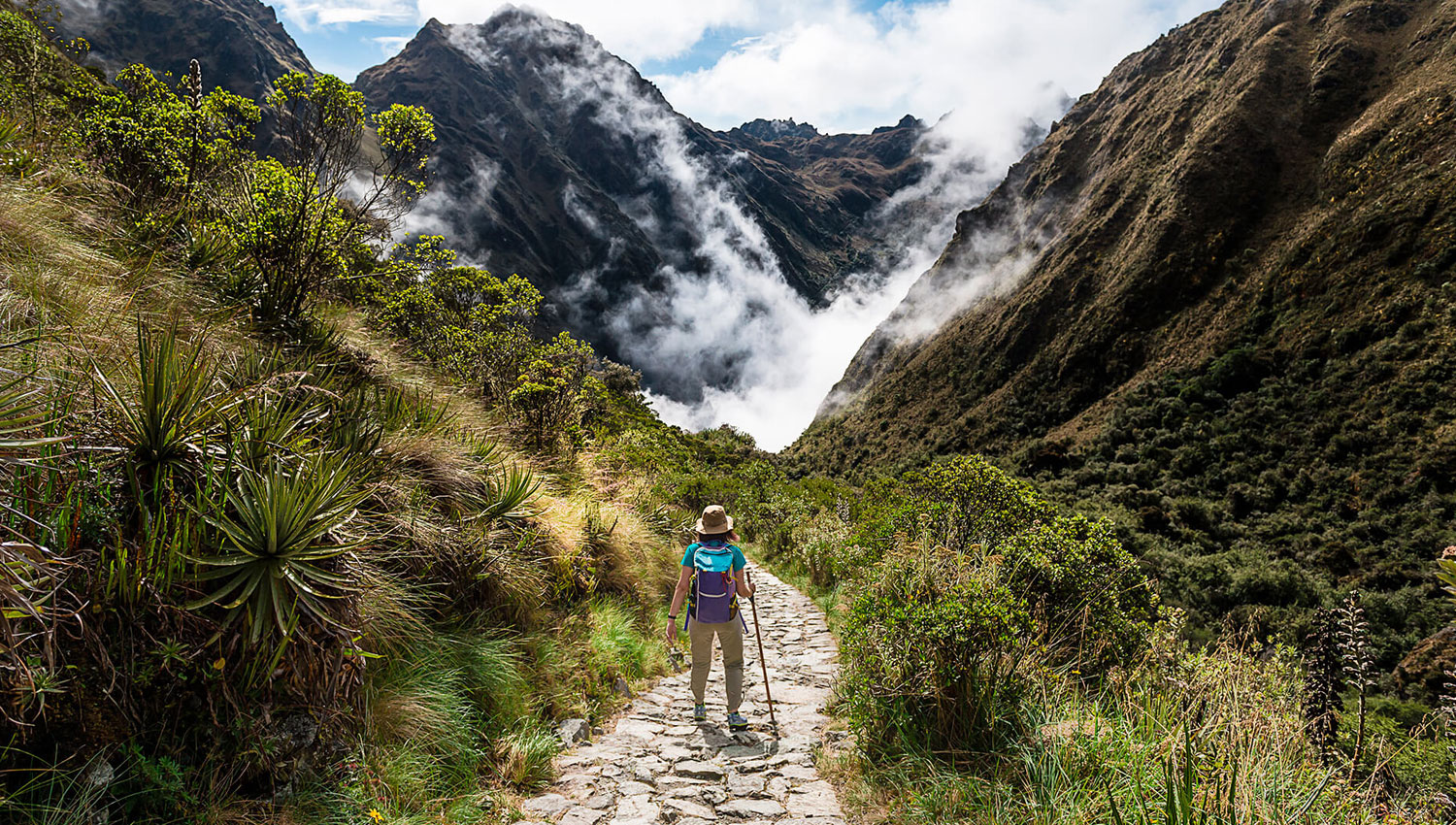
Summary of the Inca Trail to Machu Picchu
This legendary hike to the Lost City of the Incas needs no introduction. The Inca Trail is considered one of the best hikes in the world. It is a pilgrimage to a sacred city and a journey that can change your perspective on life.
Few places in the world are as inspiring and unique as the Mount Kilimanjaro Trek, the Appalachian Trail, or the Tour du Mont Blanc. The Inca Trail has a unique aspect that makes it one of the most remarkable hikes; it takes you to a world-renowned destination, the Sacred Citadel of Machu Picchu.
During the Inca Trail, you are hiking not only to see Machu Picchu but also to enjoy breathtaking views at every stop. The trail includes several Inca sites filled with history and mystery.
The journey to Machu Picchu begins in the Andes, where the climate is cold and dry, crosses the last mountains, and enters the cloud forest, the start of the Amazon. This journey through different ecosystems allows travelers to enjoy diverse landscapes, hidden Inca ruins in the thick jungle, stone-paved paths, a great variety of birds, and endemic flowers.
What are the Inca Trails?
The Incas had the largest empire in the South American region. Tawantinsuyo (4 Provinces of the Sun) was the name of the civilization that originated in the Peruvian highlands in the early 13th century until the arrival of the Spanish in 1532. At its peak, the empire ruled over Colombia, Ecuador, Peru, Bolivia, Chile, and Argentina. To connect such a vast territory, the Incas built an extensive network of trails called Qhapaq Ñan (Inca Trail).
Cusco was the capital, the center, and the most important city where the kings lived. All trails radiated from Cusco to the south, north, east, and west. The Inca Trails facilitated trade, communication, food transportation, and the movement of the Inca Army. The total length of the Inca Trail is approximately 40,000 km (25,000 miles) and has been declared a UNESCO World Heritage Site.
The Classic Inca Trail to Machu Picchu is just a small portion of this vast network of trails in Tawantinsuyo. The total length is 26 miles (42 kilometers) and was rediscovered in 1915 by American explorer Hiram Bingham.
Why is the Classic Inca Trail so famous?
The Inca Trail is one of the most incredible hikes in the world. This hike takes you through some of the most stunning landscapes in Peru, culminating in a visit to the world-famous Machu Picchu.
- The Classic Inca Trail was built during the height of the Inca Empire. Inca engineers employed advanced techniques and thousands of men to transport rocks and build stone-paved trails and sacred archaeological sites. They carved mountains to anchor trails and cities.
- After the Spanish Invasion in 1532, Manco Inca II, the Rebel Inca King, escaped to Vilcabamba and destroyed all roads and bridges; thus, the Spanish never found Machu Picchu and the Inca Trail.
- Since the Inca Trail and Machu Picchu were lost for centuries, they have been wonderfully preserved and can now be admired by travelers.
- Hiram Bingham discovered Machu Picchu in 1911 and the Inca Trail in 1915. This discovery made the Inca Trail hike very popular.
- The Inca Trail is only accessible on foot. This is Peru’s only hike reserved for porters. Porters are descendants of the ancient Chaskis, who delivered messages. This hike includes porters.
The History of the Inca Trail
- During the peak of the Inca Empire in the 15th century, Machu Picchu and the Inca Trail were built by the great Inca emperor, Pachacuti, the ninth Inca king.
- In 1532, Spanish conquistadors arrived in Peru and captured King Atahualpa in Cajamarca. The Inca king was executed.
- In 1533, the Conquistadors arrived in Cusco; Francisco Pizarro founded Cusco as a Spanish city on March 23, 1534. On April 25, 1534, Pizarro founded Jauja as the first capital of the new colony.
- On January 18, 1535, Pizarro founded the city of Lima on Peru’s central coast; it was called “the city of kings.”
- On May 6, 1536, the siege of Cusco began by Manco Inca II’s army against the Spanish conquistadors led by Hernando Pizarro. The siege was launched from the fortress of Sacsayhuaman, lasted almost 10 months, and ultimately failed.
- In January 1537, the Battle of Ollantaytambo occurred between King Manco Inca’s troops and the Spanish expedition led by Hernando Pizarro. The Inca army defeated the Spanish. Despite this victory, Manco Inca’s forces abandoned Ollantaytambo and sought refuge in Vilcabamba’s jungles, where they established a small independent Neo-Inca state until 1572. During the retreat, Manco Inca ordered all trails, bridges, and towns destroyed to prevent the Spanish from following them.
- In 1911, Hiram Bingham was in Peru searching for Vilcabamba, the last capital of the Incas, and accidentally discovered Machu Picchu. Until his death, he believed Machu Picchu was Vilcabamba, the Incas’ last capital.
- In 1915, Hiram Bingham discovered the Inca Trail and conducted excavations at all the Inca sites. He walked the Inca Trail in the opposite direction, starting in Machu Picchu and ending at the Inca Trail’s starting point.
- In 1983, Machu Picchu was declared a UNESCO World Heritage Site and one of the New Seven Wonders of the World in 2007.
- In January 2020, the Inca Trail was closed due to a landslide caused by heavy rains; it was expected to reopen in March 2020. However, due to COVID-19, it remained closed until March 2021, when it reopened at 50% capacity.
- In 2022, the Inca Trail was fully open, and 2023 was expected to be as busy as before the pandemic.
Archaeological Sites Along the Inca Trail
Salapunku: The first archaeological site after Km 82 is only visible from across the river. Inca Trail hikers will not visit this site. Travelers can only take photos from the opposite side of the river. The site features large walls and a grand gate believed to be Machu Picchu’s entrance from the Sacred Valley.
K’anabamba: Also located on the opposite side of the river from the Inca Trail, this second archaeological site was a resting place for travelers.
Llaqtapata: “We found evidence that some Inca chieftain had built his house here and included ten or dozens of buildings in the plan. They were made of rough stones placed in clay with the usual symmetrical arrangement of doors and niches. It may have been built by one of Manco’s captains” – Hiram Bingham, The Lost City of the Incas, 1912.
Willkarakay: Located above Llaqtapata, its circular construction and excellent location suggest it was used and inhabited by religious priests.
Runkurakay: Located in the heart of the Inca Trail, the semicircular ruins were once used as a resting stop for messengers and a religious site dedicated to the moon.
Sayakmarca: This incredible archaeological site, strategically located, controlled all the cloud forest valleys below. It was used for religious and military purposes.
Conchamarka: Located just below Sayakmarca, it was probably the home of an important person or a high priest.
Phuyupatamarca: “The city above the clouds” is located on a mountaintop overlooking Machu Picchu. It was an important religious site due to its water and mountains.
Intipata: Located in the thick cloud forest, this site was an important agricultural center. The terraces perfectly fit the mountain’s shape.
Wiñayhuayna: This is one of the most beautiful and important Inca sites on the Inca Trail. A religious site with temples, water fountains, and agricultural terraces.
Intipunku: Sungate, this incredible place, is a checkpoint and an astronomical observatory. The first and best view of Machu Picchu.
Machu Picchu: There is no greater joy than arriving at Machu Picchu from the Inca Trail.
